

Create an Entry Point for Your Art
Say less. Place it better.
Introduction: Instagram | YouTube
THE SHIFT
Most artists think attention comes from being seen.
It doesn’t.
It comes from being felt.
You don’t lose people because they didn’t notice you.
You lose them because nothing in your work reached them.
Seeing is passive.
Feeling is involvement.
And only one of those creates movement.
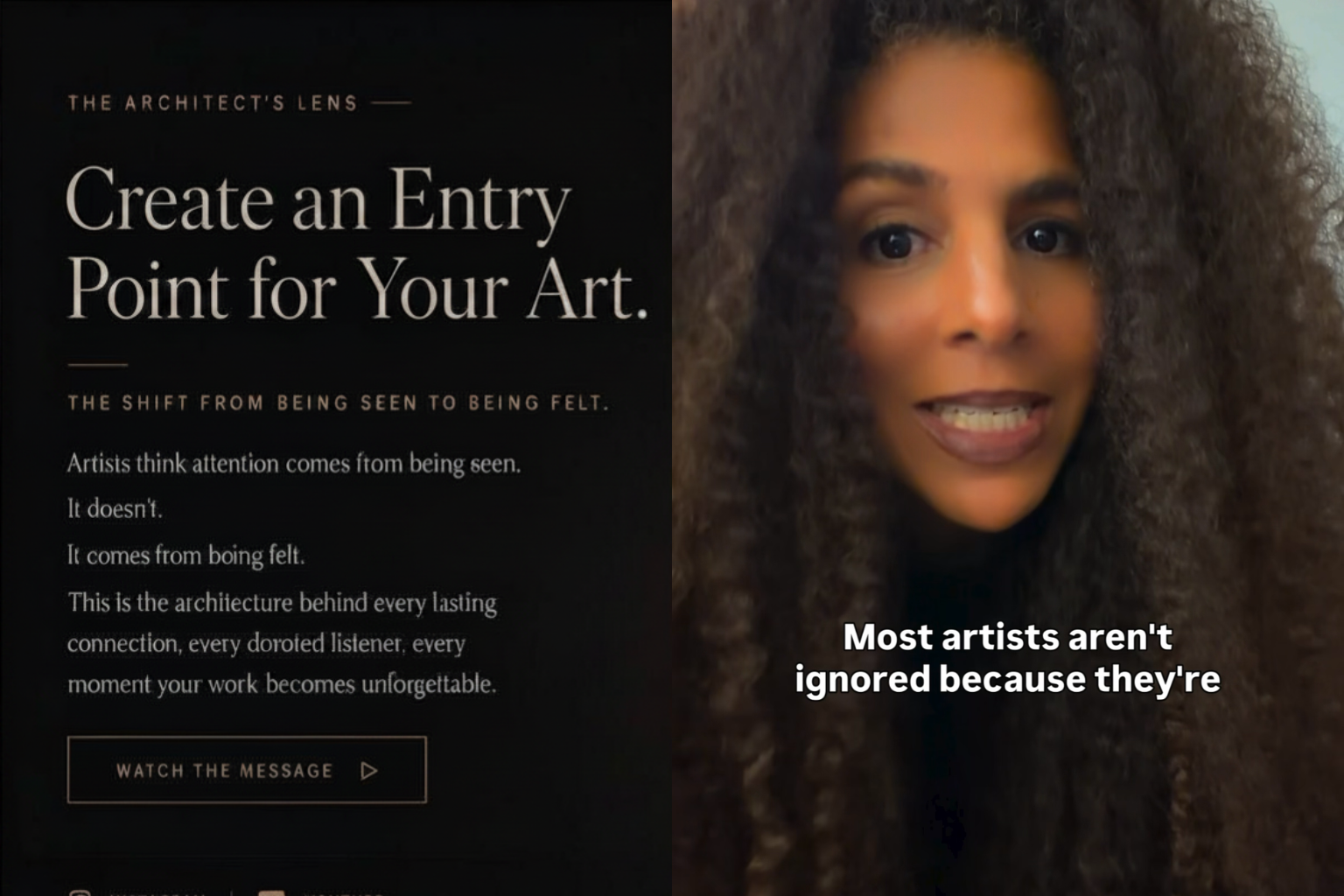
Create an Entry Point for Your Art
Short Video
WHAT MOST ARTISTS DO (WRONG)
They ask to be seen.
They announce.
They present.
They point.
Example:
“New track from The Wasn’t is out now. Link in bio.”
That’s visibility.
But there’s nothing inside it.
No tension.
No sensation.
No reason to stay.
It asks for attention
without earning it.
WHAT ACTUALLY WORKS (RIGHT)
They create a feeling first.
Not after the click.
Not after the explanation.
Before anything.
Example:
“This is what it feels like
when the noise stops,
and you mistake that for becoming something more.”
Now something lands.
Before they decide
Before they understand
Before they even know if they care
They feel it.
And that’s the moment everything changes.
THE PRINCIPLE
People don’t commit because they saw something.
They commit because something in them responded.
Feeling is the entry.
Not decoration.
Not enhancement.
The entry.
If nothing is felt in the first few seconds
nothing continues.
EXAMPLES (MULTI-ARTIST)
Painter
Wrong:
“This piece explores emotional fragmentation through color.”
Right:
“Ever felt like you were holding yourself together just to be seen as whole?”
Photographer
Wrong:
“A visual series about solitude in urban life.”
Right:
“There’s a kind of loneliness that only shows up around people.”
Writer
Wrong:
“A story about identity and internal conflict.”
Right:
“What if the version of you they know isn’t the one that’s real?”
TV writing and narrative work →
Music (The Wasn’t)
Wrong:
“The Wasn’t explores themes of identity, perception, and control through a conceptual narrative.”
Right:
“This is what it feels like when everything goes quiet…
and you think it means you’ve become something more.”
YOUR WORKSHEET
Step 1 — Identify the emotional core
Not what your work is about.
What it does to someone.
Examples:
uneasy stillness
false clarity
being seen incorrectly
losing something you can’t name
My work feels like:
Step 2 — Translate it into a felt moment
Start with:
“This is what it feels like when…”
“You know that moment when…”
“What happens when…”
Example:
“You know that moment when everything finally goes quiet
and it feels like something just shifted?”
Your line:
Step 3 — Strip everything else
Remove anything that:
explains the idea
labels the concept
requires interpretation
Keep only what lands instantly.
If they have to think first
it’s already too late.
Step 4 — Test it
Ask:
Does this create a reaction in under 3 seconds?
Yes → it’s ready
No → simplify again
Not clearer.
Sharper.
FINAL NOTE
You don’t need more attention.
You need something that reaches.
Because once something is felt
attention follows naturally.
Say less.
Place it better.
And watch what changes.
Artist Positioning, applied.
This is what it looks like.
Artist Positioning — Working Document
© 2026 KyeraWorld. All rights reserved.