

Stop Explaining: Why Strong Artist Positioning Creates More Connection Than Over Explaining
Stop Explaining.
Say less. Place it better.
For musicians, writers, filmmakers, photographers, visual artists, and conceptual storytellers building emotionally resonant creative work online.
THE SHIFT
The moment you over-explain your creative work, you reduce its emotional impact.
you reduce its emotional impact.
Most artists explain their art to make sure people understand it.
But understanding is not where audience connection begins.
Experience is.
The more you explain upfront, the less room someone has to enter.
You remove discovery.
You replace feeling with instruction.
And the moment you tell someone what something means, you quietly stop them from finding meaning themselves.
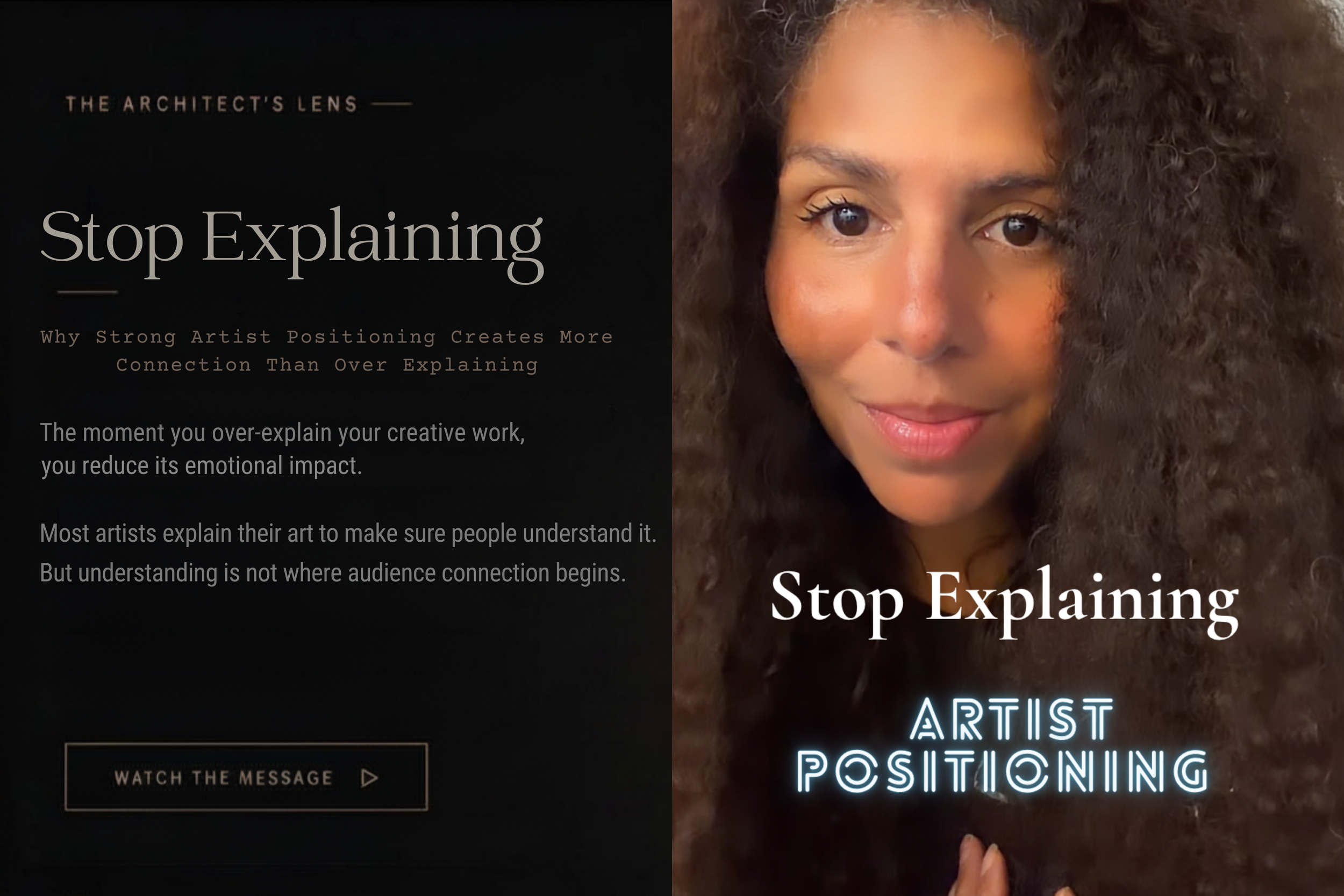
Stop Explaining
Short Video
What Most Artists Get Wrong About Artist Branding and Creative Marketing
They explain the idea.
They summarize.
They interpret.
They translate the work before anyone experiences it.
Example:
“This chapter represents the main character’s awakening and her internal conflict with reality.”
Now there’s nothing left to discover.
You already told them what to think.
The experience is finished before it starts.
And explanation creates distance.
Because instead of entering the moment, they are standing outside of it hearing about it.
What Actually Creates Audience Connection
Strong artist positioning creates emotional tension first.
Not confusion.
Not vagueness.
Space.
Example:
“She didn’t escape it.
She recognized it.
And that was worse.”
Now something opens.
Now the audience has to move toward it.
They begin asking questions.
Why was recognition worse?
What did she see?
What changed?
That movement matters.
Because curiosity creates audience participation.
And audience participation creates emotional attachment.
THE PRINCIPLE
Explanation closes the loop too early.
Strong storytelling, artist branding, and emotional positioning work differently.
They need room.
The strongest artist positioning does not overexplain.
It creates implication, tension, and emotional movement instead.
The strongest lines do not explain.
They imply.
They suggest.
They create pressure without resolution.
Because people remember what they had to enter.
Not what was handed to them fully formed.
Examples of Strong Artist Positioning Across Different Creative Fields
Painter / Visual Artist
Wrong:
“This piece represents the fragmentation of identity through layered abstraction.”
Right:
“It looked complete until you stayed with it too long.”
Photographer / Visual Storytelling
Wrong:
“This series explores emotional distance in modern relationships.”
Right:
“They stood next to each other like strangers who already knew the ending.”
Writer / Narrative Storytelling
Wrong:
“This story is about grief and the inability to let go.”
Right:
“She kept speaking to him like he still existed somewhere.”
Music / Conceptual Storytelling (The Wasn’t)
Wrong:
“This song represents the moment she realizes she misunderstood what power was.”
Right:
“She thought she found something rare.
What she found was silence.”
Artist Positioning Worksheet
Step 1 — Find Where You Explain
Look at how you currently market or describe your creative work online.
Circle anything that:
defines meaning
interprets emotion
explains the message
summarizes the concept
Examples:
“This piece is about…”
“This represents…”
“This explores…”
My explanation line:
Step 2 — Remove the Interpretation
Ask:
What moment exists underneath the explanation?
What actually happened?
What image, emotional moment, or line could replace the explanation?
Example:
Explanation:
“This story is about losing identity.”
Moment:
“She stopped recognizing herself in her own decisions.”
Your rewritten line:
Step 3 — Keep Only What Creates Movement
Remove anything that:
answers the question
tells them what to conclude
explains the meaning
Keep only what creates tension.
Strong audience connection comes from emotional tension, not overexplaining.
You are not trying to clarify.
You are trying to open.
Step 4 — Test It
Ask:
Does this make someone want to know more?
Yes → keep it
No → you’re still explaining
If it feels finished, it’s too complete.
Attention follows emotional recognition.
FINAL NOTE
Audiences do not emotionally connect through explanation alone.
They connect through tension.
The strongest work does not explain itself immediately.
It creates a moment someone has to walk toward.
Strong artist branding, music marketing, storytelling, and conceptual worldbuilding create tension before explanation.
Say less.
Let the right line carry the weight.
And watch what changes.
© KyeraWorld — https://kyera.world
For artists building emotional connection, audience resonance, and creative worlds online.